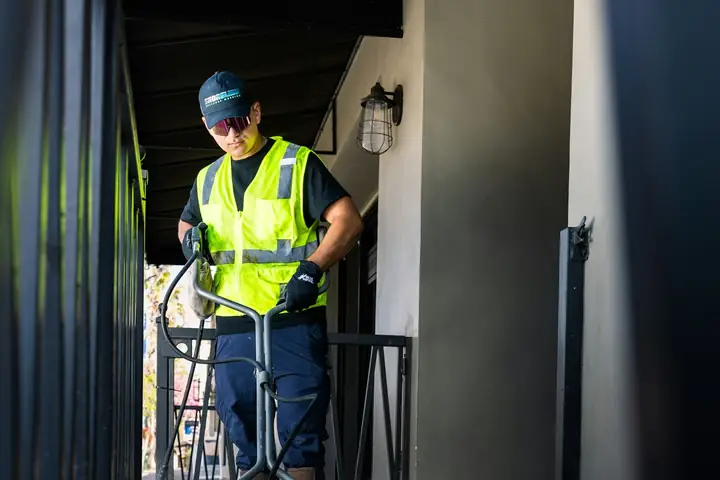
External hard surfaces collect grime, chewing gum, oil and organic growth that sweeping cannot shift. Left alone, they look neglected and can become slippery. A planned pressure washing schedule keeps the outside of a building matching the standard inside it.
What to include
- Entrances and forecourts, including steps, ramps and the area in front of doors.
- Footpaths and walkways around the building.
- Car parks, with attention to oil stains, entries and pedestrian paths.
- Loading docks and service areas.
- Bin rooms and bin enclosures.
- Outdoor seating and smoking areas.
How often
There is no single answer. Busy entrances and food areas need it more often than a rear car park. Use foot traffic, weather and how quickly marks reappear as a guide, then set a schedule that suits each area rather than one date for the whole site.
Planning around tenants and visitors
- Book early mornings, evenings or weekends when the area is quiet.
- Give tenants notice of dates, times and any areas that will be closed.
- Arrange for vehicles to be moved before car park work starts.
- Make sure work areas are coned off and wet surfaces are signed.
Questions to ask your contractor
- How is wash water managed so that detergent and grime do not run into stormwater drains?
- Which surfaces need lower pressure or a different method to avoid damage?
- Can pressure washing be combined with external cleaning of facades, awnings and signage on the same visit?
Pressure washing can be booked as a one-off job or scheduled as part of a recurring contract.